
A sales pipeline can look healthy one month and thin out the next if your lead strategy depends too heavily on a single channel. That is why the question of SEO vs PPC for lead generation matters so much for growth-minded organizations. Both can produce qualified leads, but they work on different timelines, carry different cost structures, and support different business goals.
For most companies, this is not really a debate about which tactic is better in the abstract. It is a budgeting and performance decision. Marketing leaders need to know where they can generate leads now, what will scale over time, and how to avoid paying for traffic that never converts.
SEO vs PPC for lead generation: the real difference
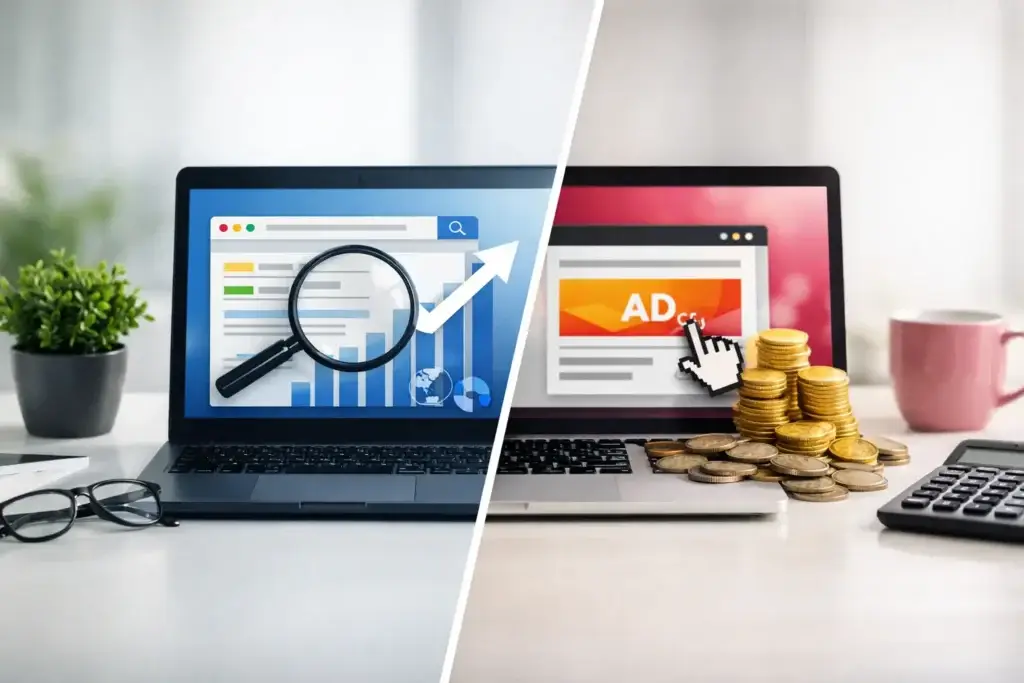
SEO builds visibility in organic search results over time. PPC places your business in paid search placements as soon as campaigns are live. That simple distinction changes almost everything, from speed and cost to reporting expectations and internal pressure.
SEO is an asset-building channel. You invest in technical site health, content quality, keyword targeting, and authority so your website earns visibility and continues generating traffic without paying for every click. PPC is a direct-response channel. You bid for placement, control targeting more precisely, and can start driving traffic and leads quickly, but each visit has a cost.
If your leadership team needs immediate lead volume, PPC usually gets attention first. If your organization wants stronger long-term efficiency and durable visibility, SEO tends to become the better strategic investment. In practice, most mature lead generation programs need both.
When SEO makes more sense
SEO is often the stronger choice when your business needs consistent lead flow over the long run and has the patience to build it correctly. It works especially well for companies with defined service lines, clear geographic markets, and high-intent search behavior.
A law firm, healthcare provider, B2B service company, or home services brand can benefit significantly from organic visibility because prospects are already searching for solutions, comparisons, and local providers. If your website is technically sound and your content aligns with the questions buyers ask before they convert, SEO can become one of the most efficient lead sources in your mix.
There is also a compounding effect that makes SEO attractive. A well-optimized service page or resource can attract traffic for months or years. That means the cost per lead often improves over time, especially compared with paid channels where traffic stops the moment spend pauses.
The trade-off is speed. SEO is not the right answer if you need leads next week. Competitive markets can take months of focused work before rankings improve in a meaningful way. SEO also depends on the quality of your website. If your site is outdated, slow, or poorly structured, even strong content strategy may underperform until the technical foundation is fixed.
SEO is strongest when:
SEO tends to outperform when search demand already exists, your sales cycle involves research, and your organization is willing to invest consistently rather than expect an immediate spike. It is also a strong fit when credibility matters. Many buyers trust organic results more than ads, particularly for high-consideration services.
When PPC makes more sense
PPC is built for speed, testing, and control. If you are launching a new service, entering a new market, or trying to fill the pipeline quickly, paid search can generate leads almost immediately. It allows you to appear for valuable search terms even if your organic rankings are weak.
That speed matters in real business situations. If a private practice needs patient inquiries this quarter, a real estate group wants to promote a new development, or a B2B company is supporting a new offer, PPC can shorten the time between strategy and lead generation.
PPC is also useful when you need clearer testing feedback. Ad copy, landing pages, offers, and keyword groups can be adjusted quickly. That makes it easier to identify what messaging drives action before investing heavily in broader content or website changes.
But PPC comes with its own limitations. In competitive industries, cost per click can climb fast. If landing pages are weak or conversion tracking is incomplete, paid budgets can disappear without producing meaningful business outcomes. PPC is rarely forgiving of a poor website experience. Fast traffic to a slow, confusing, or generic page usually just means faster waste.
PPC is strongest when:
PPC works best when urgency is high, budgets are available, and your team can manage campaigns actively. It is especially effective for bottom-of-funnel queries, branded defense, local campaigns, and targeted promotions where timing matters.
Cost, lead quality, and the hidden variables
One reason the SEO vs PPC for lead generation conversation gets oversimplified is that businesses often compare channels too narrowly. They ask which one is cheaper or which one drives more leads. Those are fair questions, but they do not get to the whole picture.
SEO usually has a higher upfront ramp because it requires strategy, technical work, content development, and ongoing optimization. PPC often appears more predictable because spend is visible and lead flow can start quickly. But cost alone is not enough. The better question is what each channel delivers in qualified opportunities and revenue.
Lead quality varies by market, keyword intent, ad targeting, and landing page relevance. Organic traffic may bring in better-informed prospects because they have consumed more content before converting. Paid traffic may convert faster because the offer is more direct. Either channel can produce weak leads if the strategy is broad, the website is misaligned, or the conversion path is unclear.
Another variable is attribution. SEO often supports early-stage discovery, while PPC may capture lower-funnel demand. If your reporting only values the last click, you can end up underestimating one channel and overfunding the other. Strong lead generation strategy depends on looking at the full path, not just the final touchpoint.
Why the website matters more than the channel
Many companies assume channel performance problems are really traffic problems. Sometimes they are conversion problems instead. If your site does not build trust, explain services clearly, and make action easy, neither SEO nor PPC will reach its potential.
This is where strategy tends to separate from tactics. Search visibility matters, but so do page speed, mobile usability, form design, message clarity, and calls to action. A high-performing campaign supported by a weak website often looks like average marketing. A strong website paired with the right search strategy usually produces better lead quality and stronger efficiency.
For that reason, businesses should evaluate search channels alongside their digital infrastructure. Website design, technical performance, analytics setup, landing page quality, and CRM integration all influence results. Agencies that can connect those pieces typically create better lead generation systems than teams managing each part in isolation.
The best answer for most businesses is not either-or
In many cases, the strongest plan is a coordinated mix. PPC can create lead flow while SEO gains traction. SEO can lower dependency on paid spend over time. Paid search can reveal high-converting keywords that inform content strategy. Organic search can strengthen brand familiarity and improve paid campaign performance.
A balanced approach also gives decision-makers more resilience. If ad costs rise, your organic presence helps protect lead volume. If rankings fluctuate or a new service needs quick traction, paid search helps fill the gap. One channel can support the other instead of competing for budget in isolation.
That is often the most practical path for organizations that need both near-term results and long-term growth. An integrated strategy is also easier to manage when one partner can align website performance, SEO priorities, paid campaigns, and reporting around shared business goals, which is why many clients turn to firms like Brady Mills.
How to decide where to invest first
If you need leads quickly, have clear commercial intent in your keyword market, and can support media spend, start with PPC. If your goal is sustainable visibility, lower long-term acquisition costs, and stronger authority in search, prioritize SEO. If your company needs both immediate demand capture and future efficiency, build a phased strategy that uses PPC for speed and SEO for durability.
The right decision depends on your timeline, market competition, internal resources, website quality, and revenue goals. It also depends on whether you are trying to solve a short-term lead gap or build a reliable growth engine.
The smartest search strategy is rarely the one that sounds best in a meeting. It is the one that fits how your buyers search, how your site converts, and how your business plans to grow over the next 12 to 24 months.