
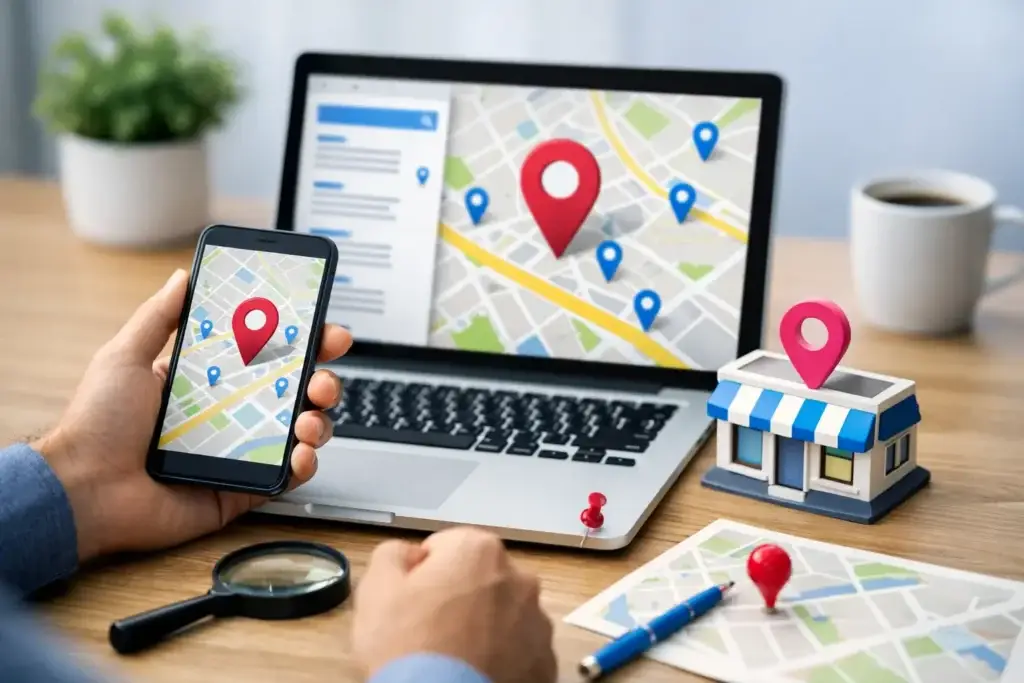
A business can have a strong website, solid services, and a good reputation – and still lose local leads to a competitor three blocks away. That usually happens when the competitor is easier to find in search. If you want to know how to improve local search visibility, the work starts with more than keywords. It comes down to relevance, trust, proximity, and a digital presence that sends consistent signals to Google and to potential customers.
For business owners and marketing leaders, local visibility is not a side project. It affects phone calls, appointment requests, foot traffic, form fills, and the quality of inbound leads. It also tends to expose operational gaps. A weak Google Business Profile, inconsistent directory data, thin service pages, and a slow mobile site can all reduce visibility even when the business itself is highly qualified.
How to improve local search visibility starts with your local foundation
The fastest gains usually come from tightening the basics. Google wants confidence that your business is legitimate, active, and relevant to a searcher in a specific area. That confidence is built from multiple data points, not one single optimization.
Your Google Business Profile is the first place to focus. Complete every field that matters to customers and search engines alike: primary and secondary categories, services, service areas, hours, phone number, website, business description, and real photos. In many local markets, this profile influences visibility as much as your website does.
Accuracy matters more than volume. A partially filled profile or outdated hours can hurt both rankings and conversions. If your listing says one thing and your website says another, search engines are left to guess. Customers usually do not bother guessing – they move on.
Just as important is consistency across the web. Your business name, address, and phone number should match everywhere they appear. That includes your website, major directories, social platforms, and industry listings. Small variations may seem harmless, but at scale they weaken trust signals and create confusion for both users and search engines.
Build location relevance into your website
A local SEO strategy breaks down when the website is too generic. Many businesses optimize their homepage for broad terms and assume that is enough. It rarely is, especially in competitive metro areas or service-heavy industries like legal, healthcare, real estate, and home services.
Create pages that clearly reflect where you work and what you do. If you serve distinct cities or regions, location pages can help – but only if they are useful. Thin pages that swap out city names are easy to spot and usually underperform. Strong local pages include service details, proof of experience in that market, nearby landmarks or community context, FAQs, testimonials, and a clear path to contact.
Your core service pages also need local signals. That does not mean stuffing city names into every paragraph. It means writing copy that naturally reflects your market, the types of customers you serve, and the problems they are trying to solve in that area. A family law firm in Dallas, a medical clinic in Tampa, and a commercial contractor in Northern Virginia will each need different local context to rank well and convert traffic.
Technical performance supports all of this. If your site is slow, hard to use on mobile, or poorly structured, local visibility will suffer. Search engines can forgive a lot, but they do not reward friction. Clean page titles, logical heading structure, schema where appropriate, strong internal architecture, and fast mobile load times are part of local SEO whether people label them that way or not.
Reviews influence rankings, trust, and conversion
Reviews are one of the clearest examples of where SEO and customer experience overlap. They affect whether your business appears credible enough to earn clicks, and they can also influence local pack visibility.
The most effective review strategy is simple and repeatable. Ask consistently, make it easy, and focus on the platforms that matter most for your business. For many companies, that starts with Google. In some industries, third-party platforms also carry weight, but Google remains central to local discovery.
Quality matters more than chasing a perfect score. A steady pattern of recent, detailed reviews is stronger than a profile with a long quiet period and only generic comments. Encourage customers to mention the service they received and the location, if relevant. Those details can reinforce local relevance without forcing unnatural language.
Responses matter too. Replying to reviews shows engagement and professionalism. It also gives you another chance to reinforce service categories and local context. That said, review management should be handled carefully in regulated industries or situations involving sensitive customer information.
Local citations still matter, but they are not the whole strategy
Citations are mentions of your business information across directories and local platforms. They are not as dominant as they once were, but they still help validate your business identity.
For most organizations, the goal is not to appear in every directory possible. It is better to be accurate in the most trusted, relevant sources. Prioritize major data providers, local directories, industry-specific listings, and chamber or association profiles where they make sense. A law firm, healthcare provider, or nonprofit may benefit from very different citation sources than a retailer or contractor.
This is one area where efficiency matters. Citation cleanup can be tedious, but it is worthwhile when information is fragmented. If your business has moved, changed phone numbers, or gone through a rebrand, fixing old listings can remove a real barrier to visibility.
Content should answer local intent, not just target local keywords
When companies ask how to improve local search visibility, they often expect a checklist. Checklists help, but content is where many businesses separate themselves from similar competitors.
Local search intent is specific. People are not just searching for a service. They are searching for the right provider nearby, with the right expertise, availability, and trust signals. Your content should address those decision points.
That might include pages about service areas, industry-specific problems, neighborhood-level needs, or location-based FAQs. A healthcare practice might publish content around when to seek care locally. A law firm might explain how state or county processes affect a client case. A real estate company might cover market trends by community. These are not generic blog topics. They help search engines understand local relevance while helping buyers move toward action.
There is a trade-off here. Producing local content at scale can create clutter if the strategy is weak. More pages do not always mean more visibility. Fewer, stronger assets usually outperform a large library of low-value content.
Proximity matters, but authority can expand your reach
One of the realities of local SEO is that some factors are outside your control. A searcher standing two miles from your office may see different results than someone across town. Proximity is built into local ranking.
That does not mean your business is stuck. Strong authority signals can improve your visibility beyond your immediate block, especially for service-area businesses and brands with established reputations. Authority comes from trusted backlinks, strong on-site content, active review generation, brand mentions, and sustained engagement with your local market.
This is where integrated marketing makes a difference. Local SEO performs better when supported by smart website structure, conversion-focused design, paid search insight, and ongoing content development. In practice, businesses that treat local visibility as part of a broader growth strategy usually outperform those that rely on isolated SEO tasks.
Measure what leads to revenue, not just rankings
Improved rankings are useful, but they are not the end goal. Local visibility should produce measurable business outcomes: calls, direction requests, booked appointments, qualified leads, and closed revenue.
Track Google Business Profile actions alongside website analytics and lead sources. Watch which service pages generate contact activity. Pay attention to which locations convert best, not just which ones attract impressions. Sometimes a page ranks well but produces weak leads. Other times, a lower-traffic page becomes a consistent source of high-value inquiries because it matches stronger local intent.
If performance stalls, diagnose before making changes. A ranking issue may actually be a review gap. A traffic issue may be caused by poor indexation or weak location content. A conversion issue may have nothing to do with SEO and everything to do with a confusing contact path or an outdated mobile experience.
For companies that need a more durable approach, Brady Mills often sees the best results when local SEO is treated as an ongoing operational discipline rather than a one-time setup. Search visibility changes as competitors improve, markets shift, and platforms update how local results are displayed.
How to improve local search visibility over time
Local SEO rewards consistency. Keep your business information current, strengthen your location and service pages, earn reviews steadily, and invest in a site that performs well technically and commercially. Then measure what happens after the click.
The businesses that win locally are not always the biggest. They are usually the ones that make it easier for search engines to trust them and easier for customers to choose them.